

No products in the cart.

When restoring a period property, it is often the smaller details that make the biggest difference. Light switches and sockets might seem insignificant compared with fireplaces, flooring or cornicing, but the right electrical fittings can help preserve the character of an older home.
But what type of switches would actually have been found in Georgian, Victorian and Edwardian houses? And how did electrical fittings change as electricity became part of everyday life?
Georgian Homes: Before Electric Light
The Georgian period predates widespread domestic electricity, so an original Georgian home would not have been fitted with electric light switches as we know them today.
Homes were traditionally lit using candles, oil lamps and increasingly, gas lighting. Electricity was still a relatively new technology at the beginning of the 19th century and domestic electrical lighting would not become commonplace until much later.

This is important when restoring a Georgian property. Rather than trying to find a switch that is supposedly “Georgian”, the aim is usually to choose a fitting that sits sympathetically within the architecture of the property.
Simple, understated finishes such as aged brass, antique-style metalwork and traditional toggle or push-button designs can work particularly well alongside Georgian interiors, without looking unnecessarily modern.

Victorian Homes: The Arrival of Electricity
The Victorian era, spanning 1837 to 1901, saw enormous developments in lighting. However, it is a misconception that Victorian homes would necessarily have had electric switches.
At the beginning of Queen Victoria’s reign, most homes relied on candles, oil lamps and gas. Electric lighting began appearing in some larger and wealthier properties towards the end of the 19th century, but it remained relatively unusual in ordinary homes. Cragside in Northumberland famously became the first private house to be lit by electricity in 1880.
As electricity began to enter homes, electrical fittings developed rapidly. Early switches could feature brass, ceramic, porcelain and metal components, with a variety of mechanisms and designs.
For a late Victorian property that was originally electrified, traditional brass switches, ceramic details and more decorative fittings can create an authentic look. For earlier Victorian houses, it may be more appropriate to choose fittings that complement the period rather than attempting to recreate an electrical installation that may never have existed.

Edwardian Homes: A More Established Electrical Style
By the Edwardian period, electricity was becoming increasingly established in British homes, although gas and other forms of lighting were still widely used.
Electrical switches became more refined and practical, with materials including brass, ceramic and early plastics appearing in domestic fittings. Push-button and tumbler-style switches were among the designs available around the turn of the century; examples of domestic switches from 1890–1920 can still be found in the Science Museum’s collections.
Edwardian interiors often have a lighter and less elaborate character than their Victorian predecessors, making simple brass, ceramic or traditional metal fittings particularly suitable.

From the 1920s: Bakelite Changes Everything
The 1920s and 1930s brought another significant change. Bakelite and other early plastics became increasingly important in electrical products, offering manufacturers a durable and practical material for switches and sockets.
Brown and black Bakelite fittings became particularly characteristic of the period, and their distinctive appearance remains popular today in homes inspired by the 1920s and 1930s.
This is where reproduction Bakelite and Bakelite-style switches can be particularly effective. They provide the visual character of early electrical fittings while offering the practicality of a modern electrical installation.

Choosing the Right Switch for Your Period Home
There isn’t necessarily one “correct” switch for every Victorian, Edwardian or Georgian property. Houses were altered, rewired and modernised throughout their lives, meaning that the fittings you find today may not be original to the building.
Instead, consider the age and architectural character of your home, the materials already present and the overall style you want to create.
At Bromleighs, our collections have been designed with this in mind. From traditional Period Switches inspired by early 20th-century designs, to our Bakelite Collection, Brown Collection and hand-finished metal switches, we create fittings that allow modern electrical functionality to sit comfortably within historic interiors.
Whether you’re restoring a Georgian townhouse, renovating a Victorian terrace or bringing an Edwardian home back to life, the right switch can be a small detail that makes a surprisingly significant difference.
Links to the mentioned collections below:
Period Switch Collection – Bromleighs Premium Electrical Hardware
Rounded Bakelite Collection – Bromleighs Premium Electrical Hardware
Bakelite Switch Collection – Bromleighs Premium Electrical Hardware
Brown Collection – Bromleighs Premium Light Switches
Edwardian Collection – Bromleighs Premium Electrical Hardware
Profile Collection – Bromleighs Premium Electrical Hardware
To keep up to date on news and new products, make sure to sign up to our newsletter below or follow our Instagram page @bromleighsltd.

Related posts
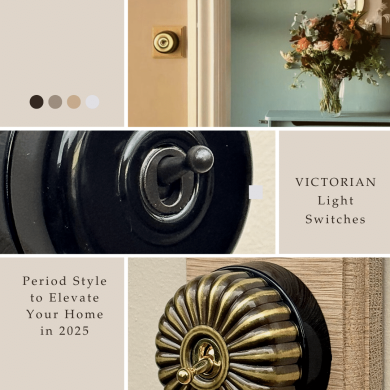
In the world of interior design, it’s often the smallest details that make the greatest impact. One such detail (humble yet transformative) is the light... Continue reading
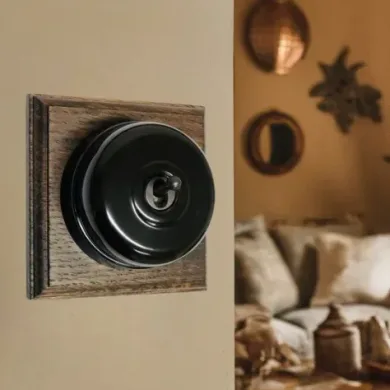
Did you catch our latest article? We've explored how the light switch has evolved over the years, from candlelight to the very first electric light,... Continue reading

Uncover the truth behind light switch designs: are they genuine echoes of the past or mere imitations? Discover the secrets now. Continue reading

Perfecting vintage light switch reproductions involves meticulous material selection, craftsmanship, and safety compliance—what's the secret to capturing their timeless allure? Continue reading

Discover how to blend historical charm with modern safety in period-accurate light switch designs, ensuring both authenticity and functionality. Ready to explore the details? Continue reading