

No products in the cart.

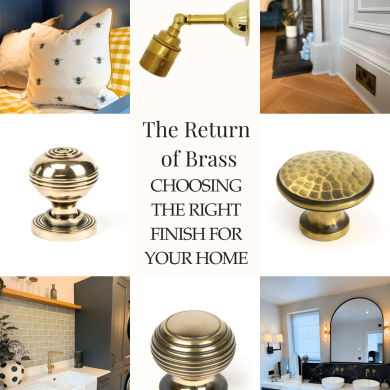
Brass has long held a place in interiors, but lately it has taken on a slightly different role.
Rather than being used for shine or statement, it is increasingly chosen for warmth, depth and quiet character. In a moment where materials feel more considered, brass offers something softer and more tactile; a finish that can sit comfortably in both contemporary and traditional settings.
One of the reasons it remains such a popular choice is that brass is not a single look. The way it is brushed, antiqued, finished or left untreated can completely change how it feels within a space. Understanding those differences can make choosing the right finish much easier.
What is the difference between aged brass, antique brass and unlacquered brass?
Although often grouped together, these finishes each have a distinct character.
Antique brass tends to have a softened, mellow tone. It often carries gentle variation through the surface, giving it depth without feeling overly dark or heavily worked. It sits particularly well in interiors where warmth and restraint are important.

Aged brass usually introduces stronger undertones and a more pronounced sense of contrast. Darker areas within the finish create definition and character, making it a natural fit for spaces that benefit from a little more visual richness.

Unlacquered brass is different again. Rather than being sealed, it is left as a living finish. Over time it reacts to handling, air and environment, gradually developing its own patina. For some, that evolving quality is exactly what makes it appealing.

The best choice is often less about trend and more about the atmosphere you want to create.
Will brass darken over time?
In many cases, yes (but that depends on the finish).
Unlacquered brass is designed to change. Exposure to air, moisture and touch will gradually deepen the tone and create natural variation. It becomes more individual with age.
Finished brass behaves differently. Aged and antique finishes are created to achieve a particular appearance from the outset, so their character is more established. They may still develop subtle shifts over time, but generally in a more controlled way.
This is often one of the qualities that makes brass so enduring. Rather than appearing worn out, it often becomes more settled and more at home in the space.
How is an antique brass finish created?
The exact process varies, but it usually begins with the surface itself.
A brushed base introduces a gentle directional texture. From there, the finish may be treated or antiqued to soften the tone and bring out depth within the metal. This is where aged brass takes on much of its character, not through uniform colour, but through subtle movement across the surface.
In many cases, hand finishing also plays a part. Small variations in tone, texture and light reflection are often what prevent it from feeling flat or overly manufactured.
That nuance is often what gives antique brass its quiet appeal.
Do all brass finishes look the same?
Not at all.
Light has a significant effect on how brass is perceived. A finish that feels warm and golden in morning light may appear deeper or more muted in the evening. Surface texture also matters. Brushed finishes catch light differently to polished ones, while antiqued finishes tend to create more tonal depth.
Context changes things too.
The same brass finish can feel very different depending on the surrounding materials; timber, stone, paint colour, plaster, natural fabrics. Even the scale of application makes a difference. A small detail on a switch plate reads differently to a larger architectural fitting.
This is often why samples can be useful. Brass is best understood in context rather than in isolation.

Which brass finishes work best with warm paint colours?
Brass and warm paint colours often work naturally together because they share many of the same qualities (softness, depth and subtle complexity).
Aged brass tends to pair particularly well with chalky neutrals, warm whites, earthy greens, olive tones and muted plaster colours. These combinations allow the metal to feel integrated rather than overly contrasted.
Antique brass can work beautifully alongside richer tones; deeper greens, charcoals, clay shades and more saturated colours, where the darker undertones of the finish can add depth and balance.
The most successful pairings often come from looking at both material and colour together. A finish does not exist independently of its surroundings. Light, tone and texture all influence how it will ultimately be experienced.

Choosing the right brass finish
Choosing brass is rarely just about selecting a colour.
It is about understanding how a finish will sit within a space — how it responds to light, how it relates to surrounding materials and what kind of atmosphere it helps create.
A quieter finish can soften a room. A darker one can add depth. A living finish can bring character over time.
Often, the right choice is simply the one that feels most at home.
If you’re struggling to make your decision, we are able to provide samples of each finish to help you. Please do get in touch to discuss!
Email: info@bromleighs.com
Tel: 01208 79490


Related posts

Most people think of metal as something fixed – solid, rigid and a little unforgiving. In reality, it’s far more flexible than that. The difference... Continue reading
Brass is making a strong return in interiors, celebrated for its warmth, elegance and timeless appeal. From subtle brushed textures to bold, bright and polished.... Continue reading