

No products in the cart.

Most people think of metal as something fixed – solid, rigid and a little unforgiving.
In reality, it’s far more flexible than that. The difference usually comes down to how it’s cut, finished, and treated. Small changes in process can completely transform not just how something looks, but how it performs and feels in the real world.
So rather than listing what we do, it’s probably more useful to show you what’s actually possible.

Precision without compromise
There’s a point in most projects where an idea bumps up against reality – more intricate designs get simplified, materials get swapped, or details get lost because they’re “too difficult” to produce cleanly.
That’s often where waterjet cutting changes things.
Because it cuts without heat, you don’t get the warping or edge distortion that can come with other methods. That means fine detail stays sharp, edges stay clean, and materials behave as expected.
In practical terms, that opens up options like:
- Curved shapes or patterns that still feel crisp and intentional – such as numbers and letters
- Mixing materials without worrying about heat damage
- Prototypes that actually reflect the final design, not a compromise
It’s less about the process itself and more about removing the usual limitations.

When finish becomes the feature
A lot of pieces are designed structurally first, with finishing treated as an afterthought.
But in many cases, the finish is the thing people notice first and remember most.
Powder coating, for example, isn’t just about adding colour. It changes how a surface reflects light, how durable it is and how it holds up over time. A well-coated piece doesn’t just look better on day one, it maintains that look.
Then there’s the more tactile side of metal finishing.
Antiquing, hammering and other treatments introduce variation with subtle inconsistencies that give a piece character. Where a flat finish might feel uniform, these techniques create depth. They catch light differently, they age differently and they tend to feel more considered.
It’s often the difference between something that looks like it’s been manufactured on mass and something that feels designed and made.

From raw to resolved
One of the more interesting parts of working with metal is how far it can travel from its starting point.
A flat sheet can become:
- A detailed screen that plays with light and shadow
- A hard-wearing branded element that lives outdoors for years
- A textured feature piece that draws attention in a space
The processes behind that transformation aren’t always visible, but they shape the outcome in a big way.
And importantly, they don’t have to be complicated from your side. Most projects start the same way: an idea, a sketch or even just a rough sense of what you’re trying to achieve.

Thinking a bit differently about it
If there’s one thing worth taking away, it’s that a lot of the usual constraints around metal aren’t as fixed as they seem.
Detail doesn’t always need to be simplified.
Durability doesn’t have to come at the expense of appearance.
And functional pieces don’t have to feel purely functional.
There’s usually more room to explore than people expect.
And if you’ve got something in mind (even if it’s not fully formed yet) it’s often worth seeing how far it can be pushed. We are always interested to see what people are trying to create, so why not get in touch!
Email: info@bromleighs.com
Phone: 01208 79490
Follow us on Instagram & Pinterest @bromleighsltd


Related posts

Brass has long held a place in interiors, but lately it has taken on a slightly different role. Rather than being used for shine or... Continue reading
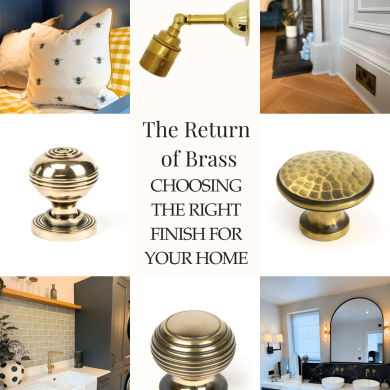
Brass is making a strong return in interiors, celebrated for its warmth, elegance and timeless appeal. From subtle brushed textures to bold, bright and polished.... Continue reading