

No products in the cart.
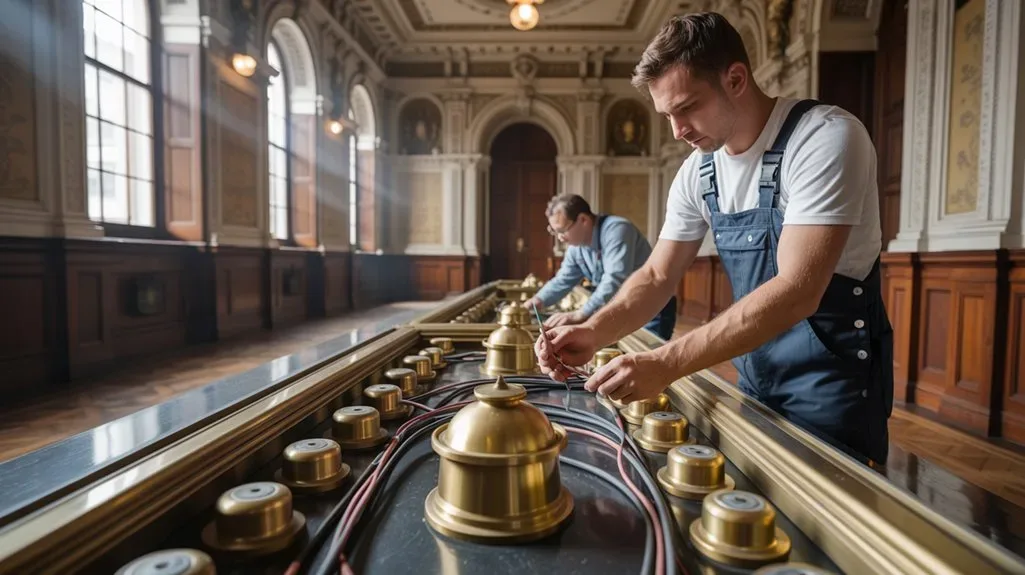

When restoring electrical components in heritage buildings, you must strike a balance between preserving historical integrity and ensuring modern safety.
Begin by evaluating original blueprints to understand the building’s unique electrical history.
Carefully source authentic materials that match vintage designs.
Use precision-focused techniques like non-invasive retrofitting to blend contemporary technology with historical aesthetics.
This meticulous approach demands expertise and attention to detail.
How do you maintain character while enhancing functionality?
Key Takeaways
- Conduct thorough inspections to identify outdated or deteriorated electrical components in heritage buildings.
- Source authentic components from antique shops, auctions, or salvage yards to match the building’s original era.
- Collaborate with restoration experts to ensure historical integrity whilst integrating modern safety standards.
- Employ non-invasive restoration techniques that preserve original wiring and architectural features.
- Seek grants and funding opportunities to support the financial aspects of electrical restorations in heritage buildings.
Understanding the Historical Significance of Electrical Systems

When examining the historical significance of electrical systems in heritage buildings, it is essential to appreciate their role in the evolution of modern living. You’ll find that these systems are not merely functional elements; they’re fundamental links in the chain of technological advancement. In understanding historical context, you see how early electrical systems mirrored the industrial and societal shifts of their time. The electrical evolution in these buildings marked the change from gas or candlelight to electric illumination, revolutionising how people interacted with their environment. By studying these systems, you gain insight into the technological innovations that shaped today’s conveniences. Recognising this progression provides a deeper appreciation for the original systems and their contribution to our architectural and cultural heritage.
Identifying and Sourcing Authentic Electrical Components
Appreciating the historical significance of electrical systems naturally leads to the challenge of identifying and sourcing authentic components for restoration. First, immerse yourself in the building’s era by studying original blueprints or photographs. This research guides component sourcing, ensuring you target the right items. Visit antique shops, specialised auctions, or architectural salvage yards—be patient, as authenticity verification is essential. Check for manufacturer marks or period-specific details on components to confirm their genuineness. Collaborate with historians or restoration experts to cross-reference findings. Online forums and communities dedicated to heritage building preservation can also provide valuable leads and advice. Remember, persistence and attention to detail in your search not only preserve authenticity but also honour the building’s historical integrity.
Assessing the Current Condition of Electrical Installations

To accurately assess the current condition of electrical installations in a heritage building, begin with a meticulous visual inspection. Focus on identifying any signs of wear, corrosion, or outdated components. Examine wiring, junction boxes, and outlets for fraying or discolouration that may indicate overheating. Document your findings thoroughly, as this condition assessment will guide future restoration efforts.
Next, evaluate the compatibility of existing installations with modern safety standards. Note any historical features that might require specialised attention to preserve authenticity. Don’t overlook the importance of understanding the building’s historical context, as it informs the electrical inspection process.
Lastly, consult with experienced professionals who specialise in heritage restorations to guarantee your evaluation is both thorough and historically accurate, maintaining the integrity of the building’s original electrical design.
Techniques for Preserving Original Electrical Features
When preserving original electrical features in heritage buildings, you’ll need to embrace authentic restoration techniques to maintain historical integrity. Focus on preserving historical wiring by carefully inspecting and repairing without altering its original pathways or materials. Additionally, guarantee vintage fixtures remain functional by meticulously cleaning and restoring them, respecting their design and craftsmanship.
Authentic Restoration Techniques
While delving into the authentic restoration of electrical components in heritage buildings, it is crucial to balance historical integrity with modern safety standards. You should employ traditional craftsmanship to guarantee every detail aligns with the building’s original era. Carefully examine existing fixtures, noting their design and materials. Recreate these elements with period accuracy, using techniques and tools from the time of the building’s construction. Seek out artisans skilled in historical methods, guaranteeing the restoration is both authentic and safe.
Incorporate original materials whenever possible, but don’t hesitate to substitute with visually identical, safer alternatives when necessary. Document every step meticulously for future reference. This attention to detail not only preserves the building’s historical essence but also respects its architectural significance while adhering to current safety regulations.
Historical Wiring Preservation
Preserving historical wiring in heritage buildings requires a meticulous approach that respects both the original design and modern safety standards. You’ll need to carefully assess the existing wiring to determine its condition and historical value. Use preservation techniques like insulation testing to guarantee functionality without compromising authenticity. Replace only damaged wiring segments with materials that match the historical context, such as using fabric-covered wire where appropriate.
Documentation is key. Catalogue each component’s location and condition before making any changes. This helps maintain historical integrity and provides a reference for future restorations. Always prioritise safety by integrating discreet modern protective devices that don’t detract from the building’s character. By balancing history with practicality, you guarantee these treasured structures remain both safe and true to their origins.
Vintage Fixtures Maintenance
With the historical wiring’s integrity assured, your focus now shifts to maintaining vintage fixtures that embody the charm and craftsmanship of yesteryears. Begin with a careful inspection of each fixture, noting any signs of wear or damage. Employ vintage fixture care by cleaning with gentle, non-abrasive materials to avoid tarnishing delicate finishes. Preserve the fixture’s original patina; it’s a reflection of its history. When addressing antique lighting preservation, replace worn wiring with period-appropriate materials, guaranteeing safety without compromising authenticity. Use energy-efficient bulbs designed to mimic the glow of originals, maintaining the fixture’s historical aura. Regularly check for loose connections and verify all components are securely fastened. This meticulous attention guarantees your fixtures continue to illuminate heritage spaces beautifully and safely.
Integrating Modern Safety Standards With Historical Integrity
Balancing the integration of modern safety standards with the historical integrity of heritage buildings requires careful planning and expertise. You must guarantee that modern technology enhances safety without overshadowing the building’s original charm. Start by adhering to current safety regulations, focusing on electrical systems that meet today’s codes while preserving architectural details. Utilise non-invasive techniques to install wiring, guaranteeing minimal impact on historical materials. Opt for modern technology that offers discreet solutions, like wireless systems or low-profile wiring, which maintain the building’s aesthetic. Collaborate with specialists who understand both historical significance and contemporary safety needs. By doing so, you protect the building’s legacy while guaranteeing it meets today’s safety expectations, achieving a harmonious blend of past and present.
Challenges in Upgrading Electrical Systems in Heritage Properties

Navigating the complexities of upgrading electrical systems in heritage properties often tests one’s ingenuity and respect for history. You must manoeuvre through a labyrinth of challenges to ensure safety regulations are met without compromising the building’s historical essence. Here’s what you should consider:
- Safety Regulations: Adhering to modern safety standards while respecting historical integrity is essential. Understanding how to integrate these without altering the building’s character is key.
- Funding Opportunities: Securing financial resources can be a hurdle. Explore grants and incentives dedicated to heritage preservation to ease the financial burden.
- Structural Limitations: Heritage buildings often have unique architectural features. Any electrical upgrade must accommodate these quirks, requiring precision and creativity.
Balancing these elements guarantees the preservation of both safety and history in your restoration efforts.
Case Studies of Successful Electrical Restorations
When you’re examining successful electrical restorations in heritage buildings, consider how innovative techniques have addressed the unique challenges these historical structures present. You’ll find that balancing modern electrical needs with the preservation of architectural integrity requires meticulous planning and execution. Let’s explore examples where precise adaptations guaranteed both functionality and respect for the building’s original character.
Innovative Restoration Techniques
Whilst the restoration of electrical components in heritage buildings presents unique challenges, innovative techniques have paved the way for remarkable successes. By focusing on precision and historical authenticity, you can employ cutting-edge strategies to breathe new life into these architectural treasures. Consider these three standout approaches:
- Innovative materials: Use non-invasive, durable materials that blend seamlessly with the building’s original fabric, guaranteeing longevity and historical integrity.
- Retrofitting solutions: Implement advanced retrofitting techniques to update electrical systems without compromising structural or aesthetic qualities.
- Detailed documentation: Maintain meticulous records and photographs to ensure every change respects the building’s historical context.
These methods not only preserve the past but also equip heritage buildings for the future, balancing modern functionality with timeless charm.
Historical Building Challenges
Despite the inherent complexities, restoring electrical components in historical buildings often reveals fascinating case studies that highlight the synergy between modern technology and historical preservation. You’ll find that historical documentation plays an essential role in these restorations. It provides a blueprint, ensuring that modern interventions respect the original design. Take, for instance, the meticulous restoration of the Edison bulb fixtures in New York’s Woolworth Building. Preservation policies mandated adherence to the building’s original electrical layout, demanding precision and respect for the past. By integrating contemporary safety standards with historical accuracy, restorations become a dance of old and new. When you explore these projects, you’ll see how effectively blending these elements protects both the building’s integrity and its future functionality.
Collaborating With Experts for Heritage Electrical Restoration

To guarantee the integrity and authenticity of heritage buildings, collaborating with experts in electrical restoration is essential. Through expert consultations, you can ascertain that every historical nuance is respected. Collaborative strategies not only preserve the building’s aesthetic but also enhance modern functionality. Here’s how it helps:
- Historical Accuracy: Experts understand the original electrical systems, ensuring replacements are true to the period.
- Safety Compliance: Specialists ensure that updated systems meet current safety standards without compromising historical value.
- Efficient Solutions: With expert input, you can achieve seamless integration of new technologies, preserving the building’s character.
Frequently Asked Questions
What Is the Cost Range for Electrical Restoration in Heritage Buildings?
When considering the cost range for electrical restoration, you need to evaluate several cost factors, such as the complexity of restoration techniques required. Costs can vary widely, generally ranging from £10,000 to £50,000. It depends on the building’s age, historical integrity, and the materials needed. An expert assessment is essential to determine precise costs, ensuring that each element is restored accurately and maintains historical value. Always prioritise precision and informed decision-making.
How Long Does a Typical Electrical Restoration Project Take?
When you’re managing an electrical restoration, understanding the project timeline is essential. Typically, such a project spans several months, depending on complexity and scope. Restoration phases include assessment, planning, and execution, with each phase requiring precision and historical insight. You’ll need to account for potential delays due to unforeseen issues. Staying informed about each phase guarantees the project runs smoothly and respects historical integrity. Always anticipate adjustments to the timeline.
Are There Specific Regulations for Electrical Work in Heritage Sites?
When you’re working on electrical projects at heritage sites, you’ll need to adhere to specific regulations. Historical compliance is critical, ensuring that all updates respect the site’s original design and architecture. Preservation standards dictate the materials and techniques you can use, emphasising authenticity and minimal alteration. You’re expected to precisely document every change, maintaining a detailed record that reflects the site’s historical integrity whilst ensuring modern safety requirements are met.
Can Restored Electrical Systems Improve Energy Efficiency?
When you restore electrical systems, you can greatly enhance energy efficiency. By integrating sustainable practices, like using modern, energy-saving technologies, you’re ensuring that systems run more efficiently. Precision-focused updates reduce waste and optimise performance. Historically-informed choices, respecting original designs, can blend seamlessly with new tech, preserving the past while embracing the future. Ultimately, these improvements not only save energy but also respect the building’s historical integrity.
What Are the Insurance Implications of Electrical Restorations in Heritage Properties?
When considering electrical restorations, you need to understand the insurance implications. Restoration permits play an important role in ensuring your project complies with regulations. Without them, your liability cover could be compromised, leaving you exposed to potential claims. It’s vital to carefully assess your policy and confirm that it covers restoration activities. Historical integrity must be maintained, so collaborate with insurers experienced in heritage properties to address any unique risks effectively.


Related posts

Renovating or upgrading electrics in old properties often comes with a familiar challenge: shallow back boxes hidden behind thick plaster, solid masonry or uneven walls.... Continue reading
For anyone renovating a period property, the smallest details often carry the greatest weight. Original fixtures (especially electrical hardware) help preserve the character and authenticity... Continue reading

At Bromleighs, every collection tells a story of British craftsmanship and the Forge Collection is one of our most characterful. Inspired by traditional metalworking and... Continue reading

Renovating a period home is about more than modern upgrades - it’s about honouring history while creating a space that feels timeless and personal. In... Continue reading
Owning a period property is like holding a piece of living history. Whether it’s a Georgian terrace, a Victorian villa or an Arts & Crafts... Continue reading
