

No products in the cart.
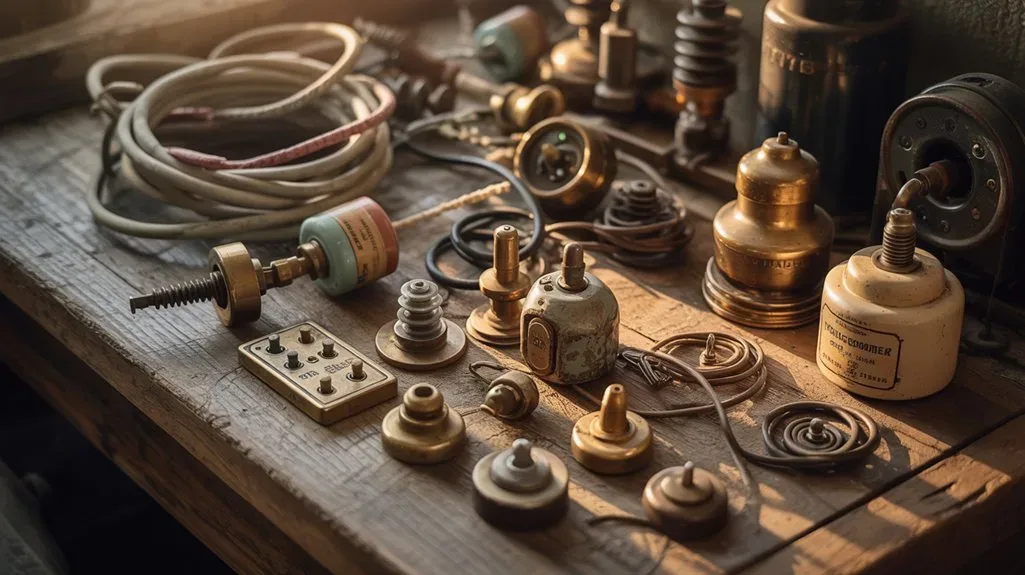

If you’re exploring vintage electrical hardware options, you’ll encounter a range of components that blend historical aesthetics with modern functionality.
From toggle and push-button switches to rotary dimmers and decorative faceplates, these elements are crafted from materials like brass and Bakelite.
Their designs not only evoke the charm of the past but also meet contemporary wiring standards.
Curious about how these pieces can enhance your space while maintaining electrical safety?
Key Takeaways
- Toggle, push-button, and rotary switches are popular vintage electrical hardware options for period-specific interiors.
- Vintage sockets range from simple two-prong designs to decorative multi-slot configurations.
- Materials like brass, porcelain, and Bakelite ensure durability and heat resistance for vintage electrical components.
- Reproduction rotary dimmers offer nostalgic design and modern functionality for lighting control.
- Period-authentic electrical plates maintain historical accuracy with designs like Art Deco and Victorian.
Types of Vintage Light Switches

When you explore the domain of vintage light switches, you’ll discover several distinct types, each with its own unique mechanics and aesthetic appeal. Decorative switch styles often include toggle, push-button, and rotary designs, crafted to complement period-specific interiors. These switches are not only functional but serve as visual focal points. You’ll find that vintage switch materials such as brass, porcelain, and Bakelite offer durability and a tactile experience reminiscent of bygone eras. The toggle switch, with its simple lever mechanism, provides a straightforward operation, whilst the push-button style offers a satisfying tactile click. Rotary switches allow for variable light levels, enhancing ambience. Selecting the right type involves understanding the mechanical function and matching the aesthetic to your desired decorative switch style.
Antique Electrical Outlets and Sockets
While exploring antique electrical outlets and sockets, you’ll encounter a range of designs that reflect the technological advancements and aesthetic preferences of their eras. Vintage outlet styles often showcase intricate craftsmanship, with designs ranging from simple two-prong configurations to more complex multi-slot options. These styles are influenced by the material choices of the time, such as brass, bakelite, and porcelain, which were prevalent antique socket materials known for their durability and heat resistance. You might find outlets with decorative faceplates, adding an ornamental touch to their functional purpose. Analysing these components provides insights into the evolution of electrical hardware, highlighting how technological needs were balanced with design aesthetics. By understanding these elements, you gain appreciation for the legacy and innovation inherent in early electrical infrastructure.
Historical Push-Button Switches

Among the myriad of vintage electrical hardware, historical push-button switches stand out for their distinctive operation and aesthetic appeal. Their unique push button design offers a tactile interaction, engaging you in a direct action-response mechanism. These switches typically feature two buttons: one for turning the circuit on, the other for off. Their vintage functionality is characterised by simple yet reliable mechanics, often employing brass or ceramic materials for durability.
When integrating these into your vintage-themed interiors, consider their compatibility with modern wiring standards. While they evoke nostalgia, verify they meet your safety requirements. The push button design not only complements period-specific decor but also provides a functional interface that transcends time, marrying old-world charm with present-day utility.
Reproduction Rotary Dimmers
Reproduction rotary dimmers infuse a classic touch into modern lighting control, expertly combining nostalgia with functionality. They provide rotary switch advantages, such as precise control and a tactile experience. These dimmers utilise a rotating mechanism to adjust lighting levels, offering nuanced ambience settings. To install effectively, consider dimmer installation tips: ensure compatibility with existing fixtures, verify wattage ratings, and follow the manufacturer’s instructions for wiring.
| Feature | Detail |
|---|---|
| Rotary Switch Advantages | Precise control, tactile experience |
| Lighting Adjustment | Nuanced ambience settings |
| Installation Tips | Check compatibility, verify wattage |
| Wiring Instructions | Follow manufacturer guidelines |
Installing reproduction rotary dimmers not only enhances your space aesthetically but also maximises lighting efficiency. By integrating these dimmers, you achieve a seamless blend of vintage charm and modern technology, enhancing both form and function.
Period-Authentic Electrical Plates

After enhancing your lighting with reproduction rotary dimmers, consider complementing them with period-authentic electrical plates. These plates are essential for maintaining historical accuracy in your vintage home. Focus on period-specific designs that match your home’s era, such as Art Deco, Victorian, or Mid-Century Modern. Select materials that were prevalent at that time, like brass, copper, or Bakelite.
When choosing decorative finishes, ensure they align with the architectural elements of your space. Polished, brushed, or antiqued finishes can provide the desired aesthetic while enhancing the authenticity of your interiors. Analyse the screw configuration and size to match modern standards without compromising historical integrity. By integrating these elements, you’ll achieve a cohesive look that respects your home’s vintage character.
Frequently Asked Questions
How Can I Safely Install Vintage Electrical Hardware in Modern Homes?
To safely install vintage electrical hardware in modern homes, you must prioritise safety precautions and utilise proper installation techniques. First, inspect the vintage hardware for damage. Consult an electrician to ensure compatibility with modern electrical systems. Utilise appropriate earthing techniques and integrate RCD protection. Do not forget to use insulated tools and wear safety gear. If unsure, always hire a professional to avoid potential hazards and ensure compliance with local codes.
What Are the Common Materials Used in Vintage Electrical Hardware?
When you’re exploring the materials used in vintage electrical hardware, you’ll often encounter brass fittings and ceramic insulators. Brass fittings provide durability and a classic aesthetic, whilst ceramic insulators excel in heat resistance and electrical insulation. These materials were selected for their reliability and functionality, ensuring safe and efficient electrical systems. By understanding these components, you can appreciate their role in historical electrical setups and make informed decisions when integrating vintage elements.
Where Can I Find Authentic Vintage Electrical Hardware for Restoration Projects?
To find authentic vintage electrical hardware for your restoration projects, you should explore niche restoration marketplaces. Websites like eBay and Etsy often list unique vintage items. You can also visit local antique shops or architectural salvage yards, providing practical vintage sourcing tips. Networking with vintage enthusiasts online can lead to hidden gems. Always verify the authenticity and condition of items, ensuring they meet your project’s specific needs and standards before purchasing.
Are There Energy Efficiency Considerations When Using Vintage Electrical Components?
When considering energy consumption with vintage electrical components, you need to recognise they weren’t designed with modern efficiency standards in mind. These components might not meet today’s safety standards, potentially leading to higher energy usage and increased risks. To mitigate these issues, examine each component’s specifications for compatibility with current systems. It’s essential to balance authenticity with efficiency by possibly integrating modern elements that preserve the vintage aesthetic while enhancing performance and safety.
How Do I Maintain and Clean Vintage Electrical Hardware?
To maintain and clean vintage electrical hardware, use gentle cleaning techniques. First, power off and unplug devices. Dust surfaces with a soft, dry cloth, avoiding moisture. For stubborn grime, lightly dampen a cloth with isopropyl alcohol. Inspect components for wear; replace frayed wires or corroded parts. Regular maintenance tips include tightening loose connections and storing hardware in a dry, cool environment to prevent rust. Always prioritise safety when handling electrical equipment.


Related posts
For anyone renovating a period property, the smallest details often carry the greatest weight. Original fixtures (especially electrical hardware) help preserve the character and authenticity... Continue reading
Did you catch our latest article? We've explored how the light switch has evolved over the years, from candlelight to the very first electric light,... Continue reading

When it comes to designing a home, most people think about the big elements first - flooring, paint colours, cabinets, maybe even statement lighting. But... Continue reading
Bakelite switches have long been a favourite in heritage, period and retro-inspired interiors. They bring a timeless elegance, a nod to early 20th-century design and... Continue reading
Following launch our new website, we wanted to take a moment to share our story - one that starts with a quirky idea, a family... Continue reading